
Car Crashes in the United States Result in High Costs. In What Areas Do these High Costs Occur?
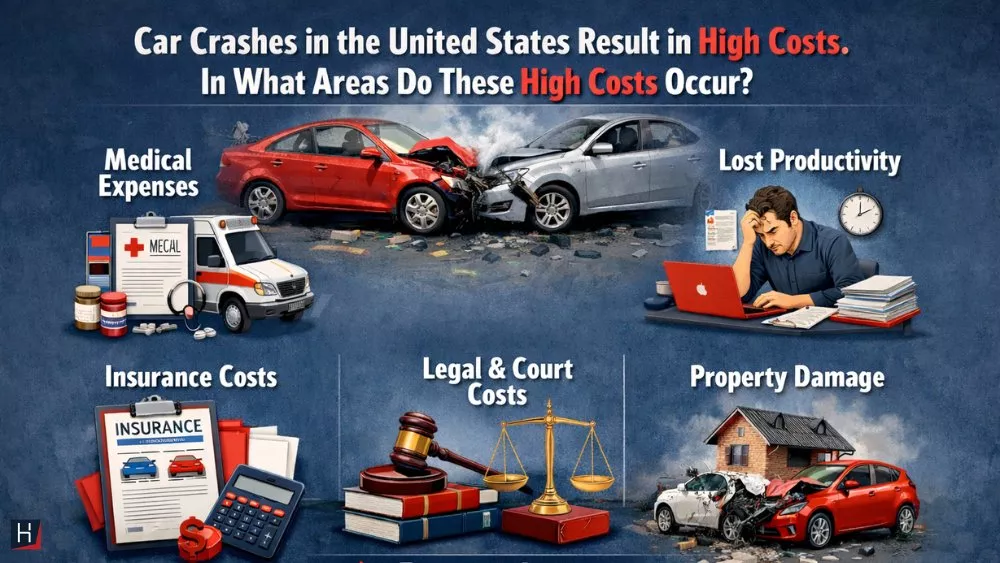
Every time two vehicles collide with each other, the bill rarely stops at a dented fender. We are talking about a massive chain reaction of hospital bills, lost paychecks, insurance spikes, legal fees, blocked roads, and quiet emotional distress. A 2019 estimate from the Department of Transportation (NHTSA) pins the economic hit at about $340 billion. The societal cost, which includes things like the value of a lost life, takes those numbers to a huge $1.37 trillion.
Another study concluded in 2023 takes the price tag to over $513 billion. The reason is higher reported injuries. In addition, the medical care and car repairs have gotten much more expensive in recent years.
How many crashes are we talking about?
The crash count is huge according to NHTSA’s most recent data, which cites about 6,138,359 police-reported traffic crashes in 2023. These crashes caused 40,901 deaths and injuries to 2,442,581 individuals. A few studies and health data employ broader measures of medically consulted injuries. They report around 5.1 million injuries for 2023. The concerned parties should know their rights in such situations and act lawfully, consulting an accident lawyer.
1. Medical and healthcare costs – $30.6 billion (2019 basis); far higher when counting recent injury volumes
Medical and emergency services cost us about 9 percent or $30.6 billion based on the older 2019 data, but it is much higher now. You can imagine everything that occurs after a bad wreck. I mean ambulance rides, ER visits, imaging, surgery, hospital stays, outpatient therapy and rehabilitation. A single minor injury might not hit your wallet hard but a serious one can easily run into the hundreds of thousands of dollars, according to NHTSA. When you multiply that by the millions of people injured in crashes every year, the national bill gets out of hand quickly.
The recent data on the medically consulted injuries and updated price levels are shocking. For 2023, the estimate is $513.8 billion across medical, property, wage and admin categories. The reasons for this jump in cost are more reported injuries and higher per-case medical expenses since 2019. For less severe injuries, the cost is about $7,400 while more severe accidents cost $167,000. It shows how the medical bill goes up in catastrophic injuries.
2. Vehicle damage and public property – about $115.6 billion (2019 basis)
The 2019 data says property damage, including repairs, totaled vehicles, towing, storage and damage to guards, signs and lights, accounted for $115.6 billion. That figure is a lot higher today because cars are now computers on wheels and can even drive themselves using sophisticated tech. It does not matter if the wreck involves old-school muscle cars or shiny, expensive trucks, the financial burden is much sharper now.
Ten years ago, if you tapped a pole, you’d just pop the dent out. But today that same fender bender might take out three sensors and a camera. The price to fix modern, pricey cars has skyrocketed because of this complexity. The time when you just had to pay for metal is gone; now you have to pay for recalibrating high technology safety gear. In addition, someone has to pay to fix the guardrails and street signs that received a damage in the crash.
3. Insurance payouts and premium effects – insurance admin $30.6 billion; premium bump for drivers
Insurance companies spent about $30.6 billion to manage claims in 2019. As a driver, you feel this most when your monthly premium goes up. Analysis tells that at-fault claims can increase the yearly premiums by several hundred dollars. An average rise could be between $740 and $770 the following year. The rates also depend on the choice of vehicle; insuring high-performance, classy Lamborghinis or exotic Bugatti cars often accompanies a huge premium because the payout for a total loss would be enormous. Even if you did not crash, you may still have to pay more because insurers spread the cost of everyone else’s accidents across many customers.
4. Legal and administrative costs – $17 billion (2019 basis)
Lawyers and court cases consume about $17 billion a year, which is 5 percent of the 2019 economic total. This cost includes litigation, attorney fees, court and filing costs, expert witnesses and settlement administration. Most personal injury lawyers take the case on a contingency basis and charge about a third of whatever settlement you get. It means even if you win, most of the money you deserve does not reach your pocket.
5. Lost productivity and economic drag – about $105.4 billion (2019 basis)
When people cannot work because of an injury, the whole economy feels it. NHTSA separates lost market productivity and lost household production and the figure they have come up with is nearly 31 percent of the economic total, or $105.4 billion in combined productivity losses. Under this inflicted cost, we are talking about wages not earned, tasks left undone, replacement hiring costs and long-term disability. The missed workdays and long-term impairments from crashes are very detrimental for the economy. The irony is we rarely talk about lost productivity and economic drag.
6. Congestion, environmental and public costs – about $37.4 billion plus $30 billion from public revenue
I am sure you have been stuck in crash traffic, sometimes in life. The idling cars at the site burn extra fuel and waste time, which cost about 11 percent or $37.4 billion in 2019. On top of that, taxpayers (yes, you) shell out roughly b a year to pay for police response, cleanup crews, and fixing the roads.
7. Mental health and quality-of-life costs – high, often hidden
While we always count the loss of money, we mostly forget about the heavy mental toll. PTSD, depression, and anxiety are common after a serious wreck. Peer-reviewed research reveal that the economic burden of PTSD alone is about $232.2 billion (2018 baseline). On the other hand, studies of depression and sleep disorders cost hundreds of billions as well. Although it is hard to put a price on a person’s quality of life, some valuations suggest that when you factor in the human cost, a single fatal crash actually costs society about $11.3 million.
Final Thoughts
Car crashes do not just cost us money; they change our lives forever. While news reports mostly talk about numbers, the real impact becomes evident in hospital bills, emotional pain, and families struggling to cope. These individual accidents add up to a huge national problem, but we can fix this by making roads safer and following the law.
FAQs
It is inflicted on everybody, unfortunately.
Drivers pay the deductibles and the higher premiums.
Insurers pay the big claims.
Taxpayers pay for the ambulances and the cops.
Basically, we all pay for it one way or another
NHTSA’s conservative 2019 economic estimate is $340 billion. Broader, more recent tallies that capture medically consulted injuries and updated prices place the 2023 figure near $513.8 billion.
Lowering the costs associated with car crashes is simple but not always easy. We need better road designs, a crackdown on distracted driving, and educate people to wear their seatbelts. Even a small drop in the number of vehicle crashes would save billions of dollars and, more importantly, a lot of lives.
About the Author: Musa Khan





news via inbox
Sign up and never miss out on the latest news and updates at HighStuff